


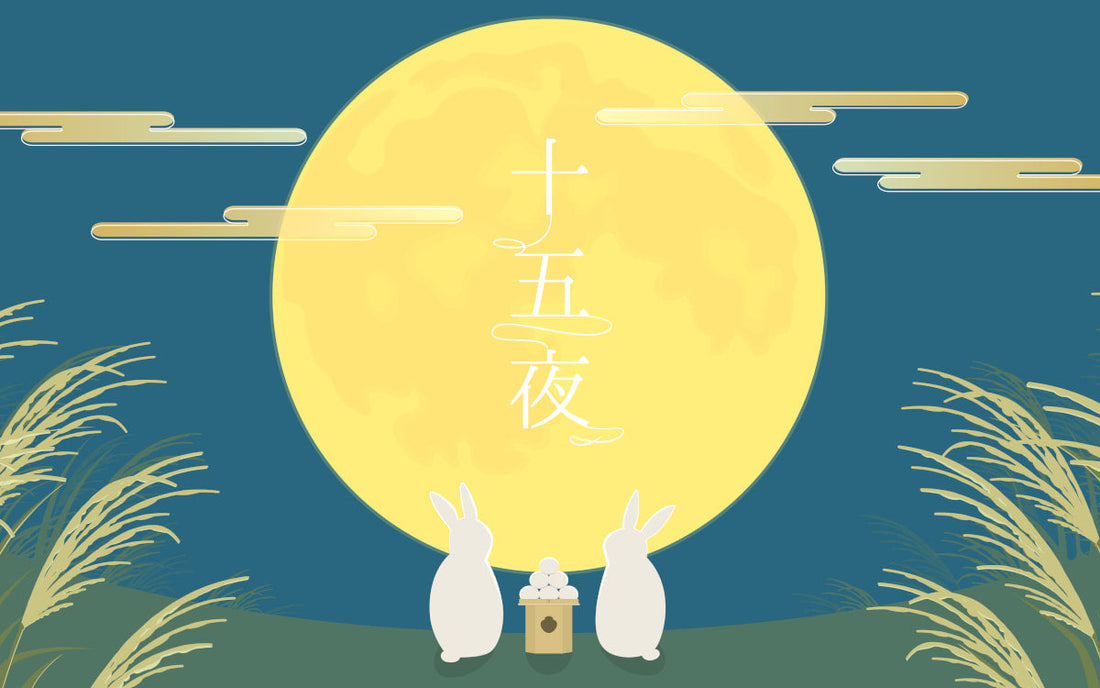
Japan Culture | Japan's "Moon Viewing" and "Mid-Autumn Festival" are Actually Different
Share
When we think of the full moon in autumn, the Mid-Autumn Festival usually comes to mind – carrying lanterns, eating mooncakes, and family reunions.
In Japan, people also look up at the moon on autumn nights, but the festival is called "Tsukimi" (meaning "moon viewing"), and it has a completely different atmosphere.
Japanese Tsukimi
Historical origins: The earliest origins can be traced back to the Heian period (794–1185), when nobles would hold banquets in their gardens and compose poems while gazing at the full moon. In addition to being a beautiful experience, moon viewing also carries the meaning of praying for a bountiful harvest.
Traditional offerings: The essential item is moon-viewing dumplings (tsukimi dango), symbolizing gratitude for the bounty of nature; at the same time, pampas grass (susuki) is inserted to pray for a successful harvest.
Seasonal foods: Autumn harvest ingredients such as chestnuts, taro, and sweet potatoes often appear on the moon viewing table.
Why are the dates different?
Mid-Autumn Festival: Fixed on the 15th day of the eighth lunar month.
Japanese Tsukimi (Moon Viewing): Also follows the old calendar, but Japan adopted the solar calendar (Western calendar) during the Meiji period (late 19th century), converting traditional festivals to the new calendar. Therefore, it sometimes falls on the same day as the Mid-Autumn Festival, and sometimes it is a day different.
Date in 2025
- Mid-Autumn Festival: October 6th (Monday)
- Japan Moon Viewing: October 7th (Tuesday)
This difference is caused by the different calendar conversions.
Modern Moon Viewing Culture
In Japan today, besides displaying dango (dumplings) and pampas grass in the home, there are some other novel trends:
- Restaurants and convenience stores will launch "moon viewing limited menus," such as egg dishes and rabbit-shaped desserts.
- McDonald's Japan launches the "Moon View Burger" every year – topped with a soft-boiled egg, it looks like a golden full moon and has become the most representative fast food for autumn.
Q&A: Moon Viewing vs. Mid-Autumn Festival
Q1: Is there a story about Chang'e flying to the moon?
Mid-Autumn Festival: Legend has it that Chang'e stole the elixir of immortality and flew to the moon.
Moon Viewing: There is no Chang'e, but the story of "the Moon Rabbit pounding mochi".
Q2: Do people in Japan also eat mooncakes?
Mid-Autumn Festival: The focus is on mooncakes, pomelos, and fruits.
Tsukimi: They eat dumplings, taro, and chestnuts, and rarely "moon cakes"; wagashi (Japanese sweets) are made in the shape of rabbits or the moon.
Q3: Can you carry a lantern?
Mid-Autumn Festival: Carrying lanterns and admiring lanterns are childhood memories for many Chinese children.
Moon Viewing: There is no custom of lanterns; the Japanese are more accustomed to quietly watching the moon or decorating it with pampas grass.
Q4: Do both emphasize family reunion?
Mid-Autumn Festival: It is a time for "people and the moon to be reunited", and families must get together.
Moon Viewing: It's a relatively quiet time, and doesn't necessarily require a large family gathering; it's also common to enjoy tea, dumplings, and moon viewing alone.
Moon Viewing Gift Box Recommendation
If you'd like to experience the Japanese moon-viewing experience abroad, consider these gift sets from Fukuoka and well-known brands:
- Ikkyu Tea - Yame Sencha + Gyokuro Double Jar Premium Gift Set: This gift set features Yame tea (Gyokuro + Sencha) from Fukuoka Prefecture, representing the highest quality and a fine example of Kyushu tea.
- Ikkyu Discovery Box - Kyushu Farmhouse Tea: Includes a variety of teas from Kyushu tea farmers, offering diverse flavors and suitable for tea lovers who want to experience different tea flavors.
- Gion Tsujiri Matcha Sweets + Sencha (Sencha) Gift Box: Matcha sweets paired with sencha (sencha), the aroma of tea and sweets combine perfectly for enjoying with dango or other sweets during a moonlit night.
Experience moon viewing at home
- Prepare small dumplings or mochi as "moon offering" snacks.
- Insert a few sprigs of pampas grass or autumn flowers
- Brew a pot of Japanese tea and pair it with wagashi or matcha desserts.
- Light Japanese incense and quietly admire the moon.
SolyJapan curates Japanese tea, incense, and seasonal goods, allowing you to experience the tranquility and beauty of the Japanese moon viewing experience no matter where you are.